
People inherit rugs, buy them on holiday, bring them down when they retire to the coast, or furnish a rental with whatever covered the floor for the least money — and then have no idea what they are standing on. That matters, because the single most expensive mistake in rug ownership is treating an heirloom like a doormat, and the second most expensive is paying heirloom money to clean a doormat. Here is enough to tell the difference.
How a Rug Is Actually Made
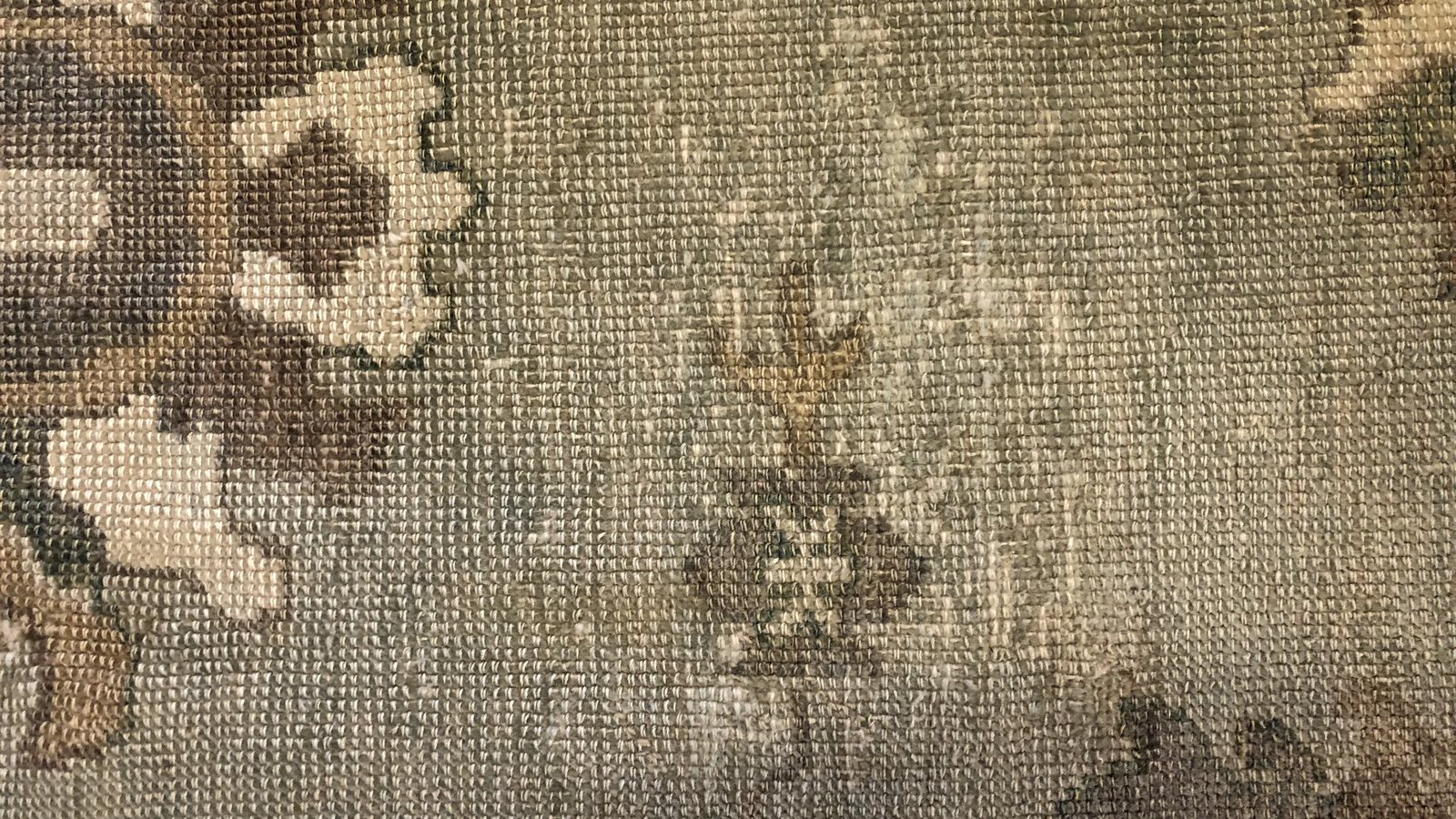
Every pile rug is built on a grid. Vertical threads called warps run the length of the rug and are what the fringe is — the fringe is not sewn on, it is the foundation poking out of both ends. Horizontal threads called wefts run across and lock each row in place. Whatever sits between them, and how it got there, is what separates a thousand-dollar rug from a hundred-dollar one.
In a hand-knotted rug, a weaver ties individual loops of wool or silk around pairs of warps, packs a row down, passes a weft, and does it again. A nine-by-twelve with a middling knot count contains a couple of million of them. That is why a real Persian rug costs what it costs, and why it can survive three generations and a wet floor.
Knot types
- Persian (asymmetric) knot — wraps one warp fully and passes loosely behind the other. Allows finer detail and curved patterns, so it shows up in Persian, Indian and Chinese weaving.
- Turkish (symmetric) knot — wraps both warps evenly. Sturdier, slightly more geometric, common in Turkish and Caucasian rugs.
- Tibetan loop knot — wool looped continuously over a rod, then cut. Modern and fast, and the reason contemporary Nepalese rugs have that thick, even pile.
Telling Hand-Knotted from the Rest in Ten Seconds
Turn the rug over. That is the whole trick, and it settles the question faster than any label.
| Construction | The back looks like | What it means |
|---|---|---|
| Hand-knotted | The pattern is visible on the back, in slightly imperfect knots. Fringe is continuous with the foundation. | Decades to centuries of life. Fully cleanable and fully repairable. Holds value. |
| Hand-tufted | A canvas or scrim backing glued on, hiding everything. Fringe is sewn on as a separate strip. | Ten to twenty years. The latex adhesive eventually fails and smells. Cleanable with care. |
| Machine-made | Perfectly uniform grid, often with a stiff synthetic backing. Faultlessly regular, which is the tell. | Five to fifteen years. Very cleanable, essentially not repairable. Inexpensive to replace. |
| Flatweave (kilim, dhurrie) | No pile at all. Same pattern both sides, reversible. | Durable and light. Needs careful moisture control in cleaning. |
Quick field test: bend the rug back on itself and look at the base of the pile. Knots tied around visible warps mean hand-knotted. A wall of glue means tufted.
Fibres, and What Each One Wants
Wool
The default for good reason. Wool fibres are naturally coiled, so they spring back under furniture; they carry lanolin, which repels soil until you strip it out with harsh detergent; and they are hard to ignite. Wool also holds close to a third of its own weight in water without feeling damp to the hand — excellent for comfort, and a genuine liability in a county where the dew point sits in the seventies for weeks at a stretch. That single property is behind most of the musty-rug calls we get.
Silk
Fine, strong in tension, and unmatched for detail and sheen. Also unforgiving: it scorches under heat, weakens when it stays wet, and browns if a spill is left. Silk rugs belong away from direct traffic and direct sun, and they never get a full-immersion wash.
Viscose, bamboo silk, art silk
All the same thing under different marketing: regenerated cellulose. It looks like silk in the showroom and behaves like wet paper in real life. Viscose loses most of its strength when saturated, yellows from plain water, and mats permanently underfoot. If you own one, keep it out of dining rooms and entryways, keep it well away from any door that opens toward the water, and never let anyone wet-clean it conventionally.
Cotton
Usually the foundation rather than the pile, and in flatweaves the whole rug. Cotton absorbs heavily, shrinks if it is dried under tension, and is the first part of a rug to rot after a soaking. It is also easy to work with, which is why flatweaves are the most forgiving rugs to own.
Jute, sisal and seagrass
Beautiful texture, terrible relationship with water. These plant fibres stain from their own moisture, brown at the edges, and mildew faster than anything else in a damp room. We would not put one in an entry hall, a screened porch or a ground-floor room under a beach house anywhere in this county, and certainly not in a rental that stands shut between bookings.
Synthetics
Polypropylene, nylon and polyester. Cheap, fade-resistant, and genuinely practical for a beach house, a rental or a room people walk into off the sand. They crush under furniture and cannot be repaired, but they clean well and cost little to replace — which is the whole point of them. One warning specific to here: insect repellent containing DEET is a strong plasticiser and will haze and soften synthetic fibre permanently, so keep the spraying outside.
Cape Fear Care Notes
Most rug care advice online is written for a dry inland house and quietly fails here. Wilmington takes something close to fifty-seven inches of precipitation a year, and unlike a climate with a wet season it arrives in every month, so there is no dry stretch in which a rug catches up. Summer dew points run in the mid-seventies for weeks at a time, hurricane season covers half the calendar, and the county has ocean on one side, sound and tidal creeks in the middle, and a river with blackwater swamps behind it on the other. Adjust accordingly.
The damp is usually coming from underneath
Houses here stand off the ground — brick piers over a crawlspace downtown, pilings at the beach — and that changes where moisture reaches your rug. The underside of your floor is in contact with outdoor air all year while the top of it is being cooled, so on humid nights the floor assembly can sit below the dew point of the room and the coldest thing touching it is the back of the rug. Water collects into the foundation with nothing spilled and no leak to find. Lift every rug two or three times a year and look at the back and the floor beneath it. If the back feels cool and heavy while the pile feels dry, that is the whole problem in one gesture.
Cleaning between guests is not the same as cleaning
On a Saturday-to-Saturday rental there is no time to rinse a rug and no way to rinse one on a floor, so whatever is applied in the changeover window stays in the pile. Surfactant residue is sticky and it collects grit, which is why a rug on a rental calendar gets dirtier faster every season no matter how often it is treated. If you run a rental, the useful pattern is the opposite of the instinct: spot-treat with water only between guests, and have the rug properly washed and flushed once, in the off season.
Check the pad before you blame the rug
Cheap non-slip pads are PVC or latex foam, and both decompose in heat and humidity. The residue bonds to the back of the rug and to the floor finish at the same time, and it browns and wicks up into the pile from beneath. A solid pad is also a vapour barrier, which in this climate is the last thing you want under a rug that is trying to dry from the back. Use a breathable pad sized to the rug, and replace it long before it starts feeling tacky.
Know which flood you had
The two are not interchangeable. Brackish tidal water backing out of a storm drain in the lower blocks downtown carries silt and street contamination. Fresh blackwater off the swamps west of the river is stained with tannin and humic acid and is mildly acidic — and tannin is a dye, which means given warm wool and a few hours it sets. Tell whoever handles the rug which one it was, because they need different chemistry, and a rug treated as though it were the other one comes back the colour of weak tea for good.
Storm season: the plan is about days, not damage
On the islands the rug is rarely ruined by the storm. It is ruined by the gap between the storm and the moment somebody is allowed back across the bridge, with the power off and the house shut. A saturated wool foundation in a warm dark room has roughly forty-eight hours before that becomes a biology problem. So the useful preparation is boring: roll the good rugs and get them up off the floor and onto something before you leave, know who can reach the house before you can, and if water got in, have that person lift the rugs and photograph them rather than waiting for you or the adjuster.
Beach chemistry is oil, not dirt
Sunscreen is engineered to stay on wet skin, and it transfers to a rug from feet, towels and the backs of legs. It does not behave like a spot — it spreads as a film through the top of the pile and glues every grain of sand it meets in place, so an area goes flat and grey without ever showing a stain and vacuuming lifts none of it. Several sunscreen filters also oxidise to a stubborn yellow-orange on cream wool if they are left through a season. A doormat and a rule about the outdoor shower do more good than anything you can buy in a bottle.
It is probably a carpet beetle, not a moth
People assume clothes moths. In the coastal Southeast the more common wool-eater is the carpet beetle, and the distinction is worth knowing because it changes what you look for. The adults are small mottled beetles that feed on pollen outdoors and come in through screens and open doors in spring; the larvae are bristly, about the size of a grain of rice, and avoid light. They do not need a shut-up room — they will graze happily under a sideboard in a house you are living in. Look for shed larval skins like tiny empty husks, a fine sandy frass at the base of the pile, and thinning that starts on the underside. Vacuum the edges, under furniture and both sides of the rug, which is exactly where nobody vacuums.
Marsh mud: let it dry, then stop
Creek mud is not sand. It is an extremely fine anoxic clay that arrives wet, wicks into the pile, and dries bonded to the fibre, and the sulphide smell comes with it. Working at it wet spreads it over twice the area; scrubbing it dry drives it further in. Let it dry completely, lift what is genuinely loose with a gentle vacuum, and leave the rest — the bonded fraction needs a wash that can flush and oxidise it, and nothing you do on the floor will get there.
Never reach for bleach, and be careful with foggers
After any wetting, in a house where mould is on everyone's mind, the household instinct is chlorine bleach or a fogging product. Wool is keratin, the same protein as hair, and hypochlorite attacks it directly: the fibre yellows, goes brittle and eventually powders, and the dye leaves with it. That damage cannot be undone and it often leaves nothing sound to reweave into. Quaternary foggers are gentler but leave a residue that attracts soil indefinitely. Get the rug up, keep it open to the air rather than sealed in plastic, photograph it, and let the treatment happen in a wash where the chemistry can be matched to the fibre and then rinsed back out. Here is what that restoration involves.
Clean it before it goes away, not after it comes back
A rug rolled into a garage or an unconditioned unit for a few months is being handed to mildew and to beetles at the same time, and a rolled rug has no air moving through it, so whatever moisture is in the foundation on the day it goes up stays there. That is how houses let between productions produce rugs with mildew grown in a spiral and permanent crush lines. Wash it first, roll it with the pile facing out, keep it off the floor, and store it somewhere conditioned.
How Often Should It Be Cleaned?
| Where the rug lives | Professional cleaning |
|---|---|
| Entry, hallway, main living room | Every 12 months |
| Dining room or kitchen-adjacent | Every 12–18 months |
| Bedrooms and low-traffic rooms | Every 2–3 years |
| Homes with pets or allergy sufferers | Every 6–12 months |
| Rented houses on a weekly calendar | Once a season, properly, in the off season |
| Rooms over an open crawlspace or piling deck | Every 12 months, and check the back twice a year |
| Before a rug goes into storage | Always, and before rather than after |
| Any rug that has been wet | Immediately |
Is It Worth Anything?
Value in a hand-knotted rug comes from knot density, the quality of the wool, whether the dyes are natural or synthetic, age, origin, condition, and how good the design actually is. A finely woven antique in sound condition can be worth many times what a large coarse modern rug costs, even though the modern one covers more floor.
Two things people get wrong. First, condition matters enormously — unravelling ends and insect grazing knock value down fast, and both are repairable, which is why fixing them usually pays for itself. Second, wear is not automatically bad: an old rug with even, honest low pile and intact structure is worth far more than one with a hole in the middle and pristine corners.
If you are curious about something you inherited, brought down with you, or found rolled in the back of a house you just bought, send photographs of the front, the back, and the ends. We will tell you what it is, roughly where it came from, and whether it is worth restoring — at no charge and with no pressure.
Short Glossary
- Warp — the lengthwise foundation threads; the fringe is their exposed ends.
- Weft — the crosswise threads that lock each row of knots.
- Pile — the surface you walk on, made of the cut knot ends.
- KPSI — knots per square inch; higher means finer detail and more work.
- Abrash — natural colour banding from different dye lots. A feature of hand-dyed wool, not a flaw.
- Selvedge — the wrapped side edges that keep the rug from unravelling sideways.
- Dew point — the temperature at which air has to give up its water. When a floor deck falls below it, the back of the rug is where that water lands.
- Tannin — the plant acid that stains blackwater the colour of tea. It behaves like a dye and sets in warm wool.
- Dry rot — foundation fibres weakened by prolonged damp; the reason wet rugs need urgency.
- Blocking — stretching a washed rug back to square while it dries.